
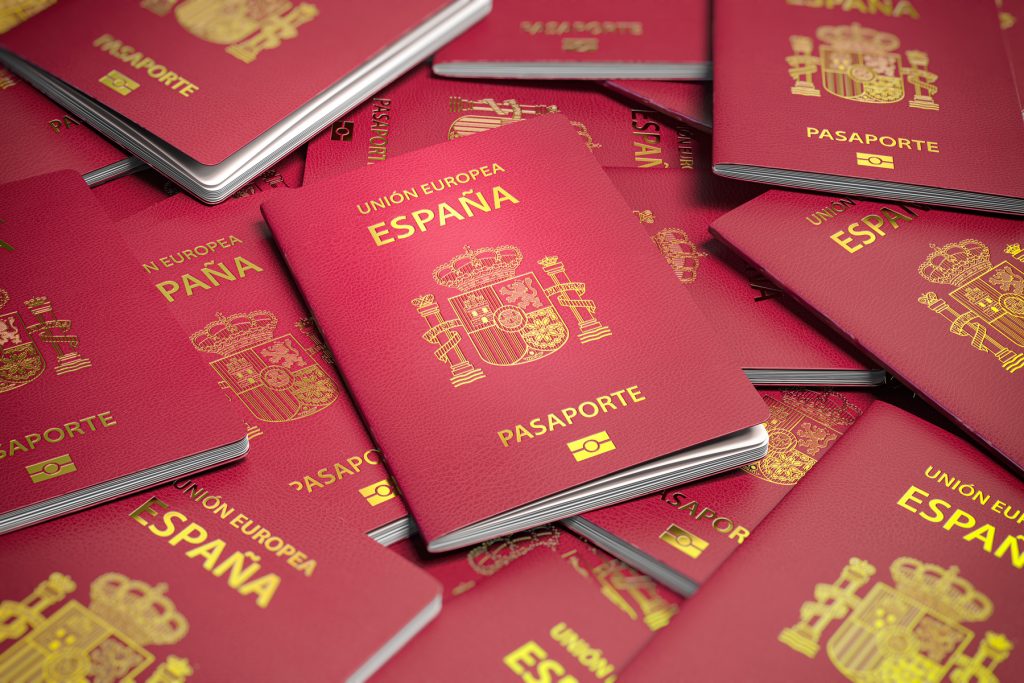
Acquiring Spanish nationality is one of the most important steps for those who have built their lives in Spain. It is not merely an administrative status change: it means becoming a citizen with full political rights, access to public office, and freedom of movement within the European Union. However, the process is complex, requires strict compliance with legal requirements, and demands careful preparation of every detail in the application.
In this article, we provide you with a step-by-step guide to applying for Spanish nationality, explaining the requirements that must be met and the most common mistakes you should avoid.
Legal Pathways to Obtain Spanish Citizenship
The Spanish Civil Code (CC) regulates the different ways of acquiring nationality in Articles 17 to 26. Although several pathways exist, the most common is nationality by residence (Article 22 CC). Other options include:
- By option (Article 20 CC): for individuals with family ties to Spaniards, such as minor children of Spanish citizens or adoptees.
- By carta de naturaleza (Article 21 CC): exceptionally granted by the Government through Royal Decree in cases of extraordinary circumstances or relevant merits (cultural, scientific, humanitarian, etc.).
- By possession of status (Article 18 CC): when a person has used Spanish nationality in good faith for at least ten years.
- By adoption (Article 19 CC): automatic for minors adopted by Spanish citizens.
In this guide, we will focus mainly on nationality by residence, as it is the most common procedure among foreign residents in Spain.
Main Requirements for Spanish Nationality by Residence
The most common pathway for foreigners is nationality by residence, regulated in Article 22 of the CC and in Royal Decree 1004/2015, which approves the Nationality by Residence Regulation.
a) Period of legal and continuous residence
The essential requirement is to have resided in Spain legally, continuously, and immediately prior to the application. Absences of more than 6 consecutive months or more than 1 year in total during the required period are not allowed, except for justified reasons.
The general period is 10 years, although there are important reductions:
- 5 years: for individuals with refugee status.
- 2 years: for nationals of Ibero-American countries, Andorra, the Philippines, Equatorial Guinea, Portugal, or people of Sephardic origin.
- 1 year: in special cases, such as:
- Being born in Spanish territory.
- Having been under the guardianship, custody, or foster care of a Spanish citizen or institution for two years.
- Being married to a Spanish citizen for at least one year (without legal or de facto separation).
- Being the widow/widower of a Spanish citizen (if there was no separation at the time of death).
- Being the child or grandchild of a Spanish national by origin, even if born abroad.
A common mistake is miscalculating this period. For example, time spent in Spain on a student visa does not count as legal residence for nationality purposes. Also, absences must not exceed the limits set above.
b) Good civic conduct
Applicants must prove good civic conduct. This is demonstrated by presenting criminal record certificates both from Spain and from the country of origin. Recent or non-cancelled convictions may lead to refusal. It is advisable to request the cancellation of records before submitting the application.
c) Sufficient degree of integration
Applicants must demonstrate integration into Spanish society, mainly through two exams organized by the Instituto Cervantes:
- DELE A2: Spanish language test, mandatory except for citizens of Spanish-speaking countries.
- CCSE: constitutional and sociocultural knowledge test of Spain.
Exemptions apply for minors, illiterate persons, elderly applicants with accredited disabilities, and those who completed compulsory secondary education (ESO) in Spain.
Step One: Check Your Legal Status and Residence
Before starting the process, it is essential to verify that the residence period has been met, and that it has been uninterrupted and legal.
Example: a Peruvian citizen residing in Spain since 2022 may apply in 2024 (reduced period of 2 years). However, if they spent eight months abroad during this period, the continuity would be broken, and they would need to wait again.
Step Two: Citizenship Exams
To prove integration, applicants must take:
- CCSE Exam: on the Constitution, society, and culture of Spain. Requires at least 15 correct answers out of 25.
- DELE A2 Exam: certifies basic language proficiency, mandatory except for nationals of Spanish-speaking countries.
Failing to prepare for these tests is a common mistake. It is advisable to practice with official models and mock exams.
Step Three: Prepare the Documentation
The required documents for nationality by residence include:
- Official Ministry of Justice form.
- Valid and complete passport.
- Residence card (TIE) and residence certificate from the Central Register of Foreigners.
- Current and historical certificate of registration (empadronamiento).
- Legalized and translated birth certificate, if applicable.
- Criminal record certificates from country of origin and Spain, legalized/apostilled.
- Proof of payment of the administrative fee (form 790, code 026; in 2025, €104.05).
- DELE and CCSE diplomas, unless exempt.
- Case-specific documents (marriage certificate, guardianship resolution, etc.).
A frequent mistake is submitting expired or improperly legalized documents, which can lead to inadmissibility or delays.
Step Four: Submission of the Application
The most advisable method is online submission through the electronic portal of the Ministry of Justice, using a digital certificate or Cl@ve system. It can also be filed in person at the Civil Registry or Immigration Office, either personally or through a legal representative, but the online route is faster and allows tracking.
Step Five: Processing and Deadlines
The Ministry of Justice gathers police, judicial, and immigration reports. The legal deadline for resolution is one year, but in practice it often takes longer. If no response is received, negative administrative silence applies, allowing the applicant to file an administrative appeal before the National Court.
During processing, the Ministry may request additional documents. Failure to respond on time may result in the case being closed.
Step Six: Resolution, Oath, and Issuance of Documents
If approved:
- Notification is sent electronically to the applicant.
- The applicant must attend the Civil Registry within 180 days to swear or promise allegiance to the King, the Constitution, and the laws.
- This can be done at the Civil Registry or before a notary (faster but with an additional cost).
- After registration, the applicant can request their Spanish DNI and passport.
Note: except for nationals of Ibero-American countries, Andorra, the Philippines, Equatorial Guinea, Portugal, or Sephardic origin, applicants must renounce their previous nationality.
Common Mistakes to Avoid
The original document highlights the most frequent errors:
- Miscalculating residence periods.
- Applying without having passed the DELE or CCSE exams.
- Submitting expired, incomplete, or non-apostilled documents.
- Having recent criminal records without cancellation.
- Not paying the administrative fee or failing to attach proof.
- Ignoring Ministry notifications.
- Not attending the oath within the six-month deadline.
Avoiding these mistakes can make the difference between success and refusal.
In conclusion, applying for Spanish nationality by residence is a demanding but achievable process if deadlines are met, documentation is thoroughly prepared, and the steps are well understood. The updated regulations establish clear timelines, integration exams, and continuous residence requirements that should not be underestimated. With proper preparation and attention to detail, the path to Spanish citizenship can be taken with greater security and fewer surprises.